
The environment
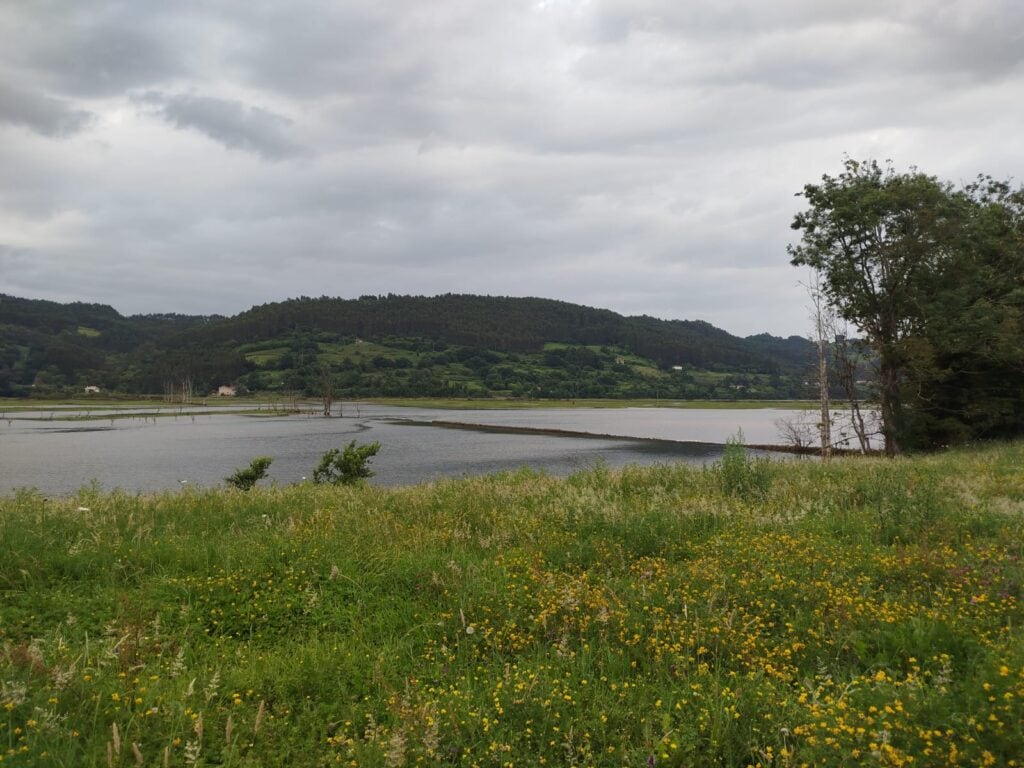
Discover the Villaviciosa Estuary Nature Reserve
Hacienda Cavanilles It is located in an exceptional location, surrounded by the stunning beauty of the Villaviciosa Estuary, one of the most valuable nature reserves in northern Spain.
From here, visitors can enjoy unique biodiversity and participate in a wide variety of outdoor activities.
Nature and Activities

Hiking and panoramic routes
Explore the valleys and hills surrounding the estuary, ideal for hiking and wildlife watching.

Water sports
Kayaking, paddle surfing, and boat trips along the estuary (subject to authorization from the coastal demarcation).

Bird watching
The estuary is home to more than 100 species of aquatic birds, a paradise for birdwatchers.

Cultural tourism
Discover the history of the estate and its connection to the Cavanilles family, as well as the rich heritage of the area.
NATURE.
The house is located on a 10,350.00 square meter plot, bordered on its north and west ends by the Villaviciosa estuary, making it a direct witness and in a magnificent position to the estuary, its flora and fauna.
Due to this strategic location and its connection to and belonging to a unique area, the aim of this privileged position is to promote the partial nature reserve of the Villaviciosa Estuary, also contributing in part to its landscape recovery through the rehabilitation of one of its most unique buildings, as well as the aesthetic transformation of the plot.
The Villaviciosa Estuary Partial Nature Reserve is an estuary considered to be of high ecological value, notable for its halophilous and subhalophilous vegetation, its faunal importance, especially ornithological, and the wide variety of habitats found within it.
The estuary opens wide near Tazones, between the beaches of El Puntal and Rodiles and gradually narrows until it reaches the very centre of Villaviciosa, reaching the "porreos", the name given in the area to the land that has been reclaimed from the sea and where one can find subhalophilous meadows with channels and ponds of great interest.
The territory it occupies can be divided into four zones: the mouth complex, where Rodiles Beach is located; the sandy bay, which extends mostly over Misiego Inlet; the mudflats, a transit point for countless species of seabirds of great ecological interest; and the upper channel, where the river influence is most dominant, the property being located between these last two.
The gentle forests surrounding the region's valleys make them unparalleled places for hiking, and reaching their peaks with impressive views is an ideal spot for paragliding or hang gliding.
Along the coast and the banks of the estuary, you can enjoy a wide range of water sports: surfing, windsurfing, canoeing, and sailing for the more adventurous, and relaxing boat trips along the estuary for landscape lovers. These activities are intended to be offered to guests if the coastal demarcation permits the installation of a dock or light jetty that allows access to the water with kayaks, paddleboards, and more.
As for the climate, the region in which the Villaviciosa Estuary is located has mild temperatures, where frost is rare, especially near the sea.
FLORA.
The general characteristics of the vegetation in this estuary are common to the rest of the estuaries in the Eastern Cantabrian Sea. However, it is the only Asturian estuary of this type.
Various plant communities grow in the mudflats flooded daily by the tides. The lower stratum contains the meadows of Zostera noltii, which, in some slightly higher points, are accompanied by stands of Spartina maritime, a species that has its only location here in the Principality.
Above these monospecific grasslands grow halophilous shrublands, which are highly diverse in this estuary. The most notable, unparalleled along the entire Cantabrian coast, are those formed by a halophilous subshrub: Suaeda vera.
FAUNA.
The amateur naturalist, and birdwatcher in particular, will find a wide range of marsh species here. Some are sedentary, others winter, and species that are abundant during autumn migration. The Villaviciosa Estuary is considered, after the Eo River, to be the Principality's second-largest wintering and migratory resting area for European waterfowl populations. Nearly one hundred of these species, belonging to a total of 16 families, have been identified, making it worthy of the status of Wetland of National Importance, according to the Spanish Ornithological Society. An officially protected area, the Villaviciosa Estuary Bird Refuge, is considered a Hunting Refuge with an area of 1,500 hectares.
The spatial distribution of waterfowl varies according to the tides. At low tide, waders are distributed throughout the mudflats, also occupying shallow water areas and channels. The surrounding orchards and meadows also host contingent numbers of waterfowl, especially during the coldest periods.[1]
[1] Source: https://www.turismoasturias.es/descubre/naturaleza/espacios-protegidos/ria-de-villaviciosa